Megan Brown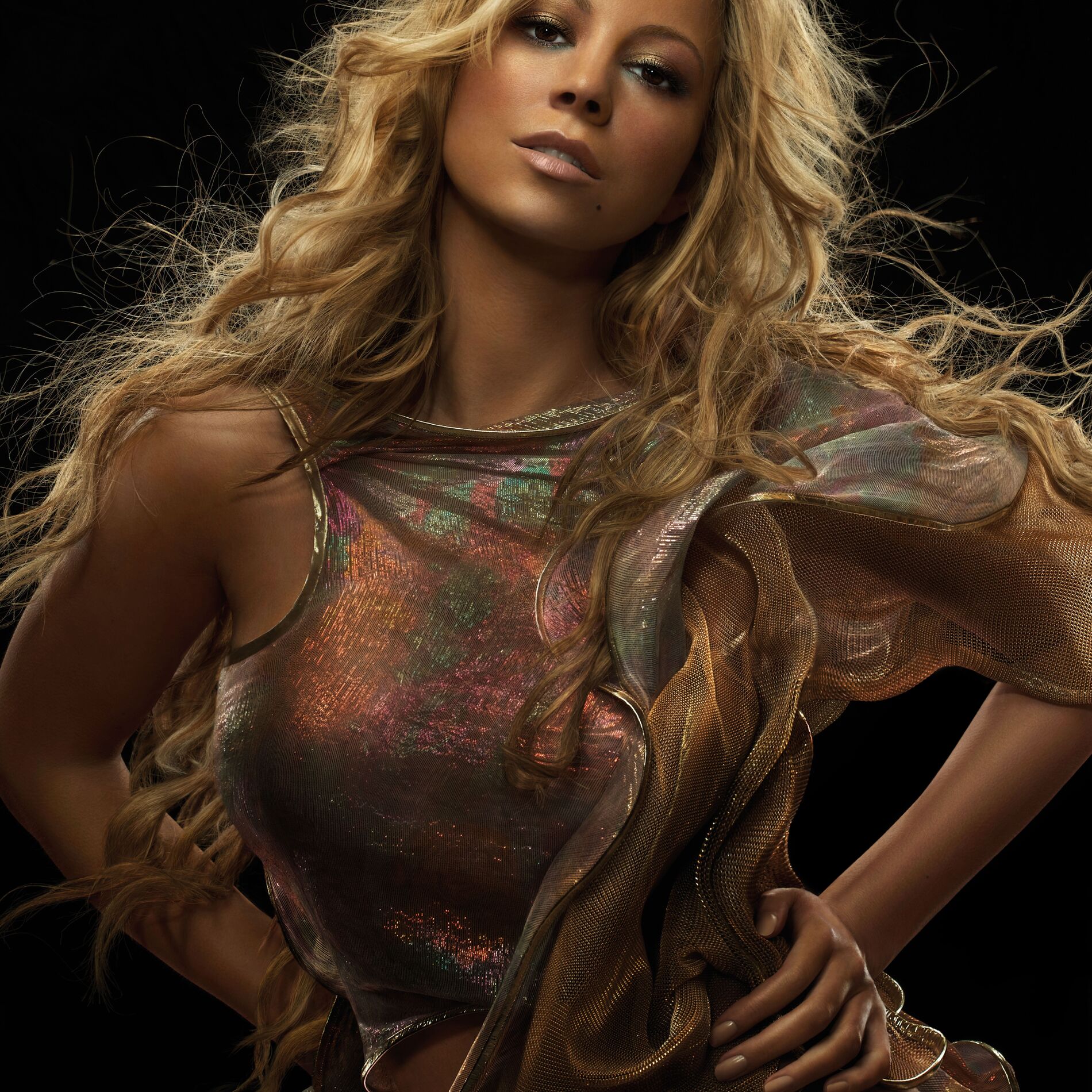
The speed of light used to be a universal constant, but in 2026, it’s been surpassed by the speed of a “like.” We live in an era where pop culture is no longer a slow-cooked stew of shared experiences, but a series of high-voltage shocks delivered straight to the nervous system. If you feel like you’re constantly catching your breath, it’s because the modern cultural cycle is no longer driven by reflection; it is powered almost entirely by reaction.
We have moved from a “Read and Understand” society to a “Watch and React” one. In this landscape, viral behavior matters infinitely more than explanations. We don’t wait for the context of a celebrity’s wardrobe malfunction or a brand’s bizarre social media post; we drop a comment, share a meme, and move on to the next stimulus before the original subject has even had time to issue a press release. This shift has fundamentally altered how we consume art, news, and even our relationships with one another.
The Death of the “Slow Burn”
Think back to how culture functioned just a decade or two ago. A movie would come out, and people would talk about it for months. A scandal would break, and journalists would spend weeks uncovering the “why” and the “how.” There was a period of digestion—a quiet space between the event and the public’s conclusion. Today, that space has vanished.
In February 2026, we saw this in real-time with the Milan-Cortina Winter Olympics. When Mariah Carey took the stage for the opening ceremony, the performance wasn’t just a musical event; it was a digital Rorschach test. Within seconds of her hitting the first note of an Italian-language medley, the internet wasn’t listening—it was reacting. Before she had even finished her custom Roberto Cavalli-clad set, there were already ten thousand “threads” debating the acoustics of the San Siro stadium versus the “diva energy” of her ostrich feather stole.
The performance itself became secondary to the reaction to the performance. This is the hallmark of 2026 culture: the event is merely a prompt. The real “content” is the noise we make in response to it. We are no longer a community of spectators; we are a hive of commentators. The “explanation”—the fact that Carey wanted to honor the host country’s heritage—was a footnote that appeared hours after the viral clips had already peaked. By the time the explanation arrived, the internet had already decided whether the moment was a triumph or a “muddled” mess.
Why Viral Behavior Outpaces Logic
Why does a 15-second clip of a “Seven Minute Louvre Heist” (a satirical 2025 TikTok trend) garner more intellectual investment than a deep-dive documentary on actual art theft? The answer lies in the psychology of the “hit.”
As humans, we are hardwired for novelty and social proof. When we see a post blowing up, our brains interpret that engagement as a signal of value. We don’t ask, “Is this true?” or “What is the context?” We ask, “Why is everyone talking about this, and how can I join the conversation?” This is what researchers call “Cultural Citizenship.” To belong to the modern world, you must participate in the reaction cycle. Silence is no longer seen as a lack of opinion; it’s seen as a lack of presence.
This creates a “Reaction Economy” where the most extreme, immediate, and high-arousal responses are rewarded by algorithms. If you post a thoughtful, 500-word reflection on why a specific fashion trend is a sign of economic anxiety, you might get a few dozen likes. If you post a video of yourself screaming “WHAT IS SHE WEARING?!” at a red carpet photo of Bianca Censori, you might get five million views. The algorithm doesn’t care about your “why”; it cares about your “whoa.”
The Illusion of Authenticity
One of the great ironies of 2026 is that while we claim to crave “radical authenticity,” we mostly just consume “performative reaction.” We’ve reached a point where influencers and brands “pre-react” to their own content. They post a video with the caption “Wait for the end…” or “I can’t believe this happened,” essentially telling the audience how to feel before the event even occurs.
We see this in the “Un-Influencer” trend. These are creators who pride themselves on being “lo-fi” and “unfiltered.” Yet, even their lack of polish is a calculated reaction to the overproduced era of the 2010s. They are reacting to the previous trend, not reflecting on their own reality. When a creator records themselves crying about a breakup, they aren’t necessarily seeking reflection or healing; they are seeking the viral behavior that follows vulnerability. The “tear-streaked selfie” has become a currency, a way to trigger a specific, predictable reaction from a digital audience.
This has led to a collapse of the “monoculture.” We no longer have big, shared moments that we all think about together. Instead, we have millions of micro-reactions happening in silos. We are all looking at the same thing, but we are looking at it through the lens of how we can use it to define ourselves to others. We share a clip of a “chaotic” brand mascot (like the legendary Duolingo owl antics) not because we love the product, but because sharing it says something about our sense of humor.
Reflection as a Radical Act
In a world that demands an immediate take, the act of waiting has become a radical one. To say “I don’t have an opinion yet; I’m still thinking about it” is almost an admission of cultural defeat in the 2026 landscape. We have lost the “Golden Hour” of crisis communication and personal thought. If a brand waits 52 hours to respond to a viral rumor—as some did during the 2025 “Coldplay Clip” controversy—the internet fills that silence with its own version of the truth.
This is why “Viral Behavior” matters more than “Explanations.” Behavior is fast; explanations are slow. Behavior is emotional; explanations are logical. Behavior is shared; explanations are read. In the battle for our attention, the fast, emotional, shared experience will always win out over the slow, logical, individual one.
We see this in the “Nostalgia Loop” currently gripping the youth of 2026. Gen Z is obsessed with “2016 Core”—a time that feels like a simpler era of the internet. But even this nostalgia isn’t reflective. They aren’t looking back to learn from the past; they are reacting to the exhaustion of the present. They are using 2016 aesthetics as a costume, a way to signal a desire for a slower cycle while simultaneously using the high-speed tools of the present to spread that signal.
The Future: From Reaction to Connection?
As we move deeper into 2026, there is a growing “social media fatigue.” People are starting to realize that a life lived in a constant state of reaction is a life lived in a state of stress. The “Outrage Cycle” is exhausting. The “Trend Cycle” is expensive. The “Reaction Cycle” is shallow.
We are beginning to see the rise of “Intentional Communities”—spaces where the goal isn’t to go viral, but to actually discuss something. Brands are being told to stop chasing “viral moments” and start earning “Cultural Citizenship.” This means being a part of the community, not just a parasite on its trends.
But for now, the cycle remains. Today’s pop culture moments are like fireworks: they are bright, they are loud, they demand you look at them right now, and they leave behind nothing but smoke. We react, we share, we trend, and then we forget. The challenge for us as consumers—and as humans—is to find the moments worth reflecting on in a world that only wants us to react.
The next time a “shocker” hits your feed, or a celebrity does something “unhinged,” ask yourself: Am I reacting because I have something to say, or am I just feeding the machine? Sometimes, the most powerful thing you can do in a reaction-driven world is to simply stay silent and think.