Megan Brown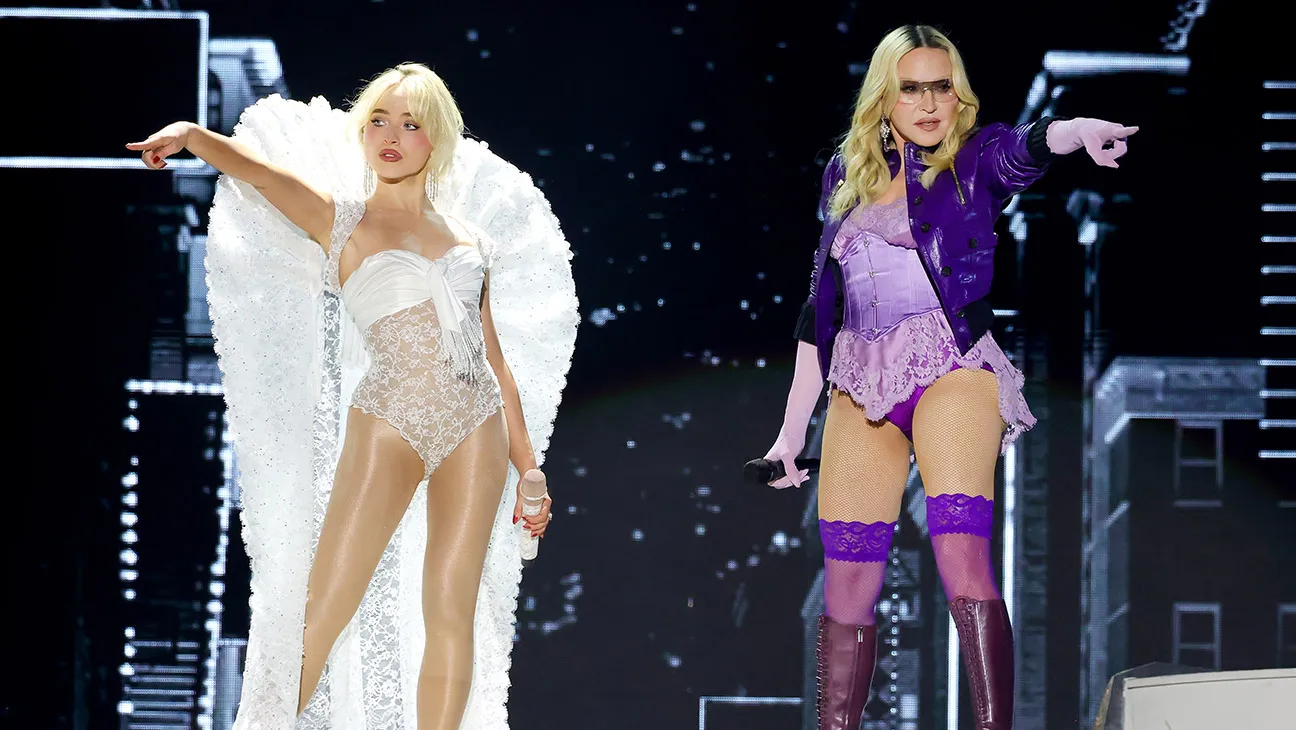
When Madonna stepped onto the stage during Sabrina Carpenter’s headline set, it wasn’t just a surprise cameo—it was a cultural reset. The moment carried a sense of symmetry that the internet immediately latched onto: a full-circle return nearly two decades after Madonna’s defining presence in the Coachella Valley Music and Arts Festival era that helped shape modern festival culture as we know it.
The impact wasn’t just about nostalgia. It was about continuity. In a landscape where attention cycles are short and trends move quickly, this moment bridged generations of pop culture in real time. Madonna, long associated with reinvention and boundary-pushing performance, appeared within a set led by an artist whose rise has been defined by consistency and precision. The contrast—and the connection—was impossible to ignore.
What made the moment resonate so strongly online was its layered meaning. For longtime fans, it felt like a callback to a period when Coachella symbolized cultural peak moments rather than continuous content streams. For newer audiences, it reframed Madonna not as a legacy act, but as an active participant in current pop culture. And for the industry, it highlighted something deeper: influence doesn’t disappear—it evolves, reappears, and reasserts itself in unexpected ways.
Social media amplified the moment instantly. Clips circulated within minutes, edits layered past and present performances together, and commentary flooded platforms analyzing the symbolism. But unlike typical viral spikes, this moment had narrative weight. It wasn’t just surprising—it meant something. It connected eras, styles, and strategies of relevance, turning a single appearance into a broader cultural conversation.
It also underscored how live events are evolving. Festivals are no longer just about lineups—they are about moments that can ripple across the internet long after the performance ends. A surprise appearance like this doesn’t just enhance the experience for attendees; it extends the event’s reach globally, creating a shared digital experience that mirrors the physical one. In this sense, Madonna’s return wasn’t just a performance—it was a strategic re-entry into the cultural spotlight.
For Sabrina Carpenter, the moment reinforced her position in the current landscape. Sharing the stage with a figure like Madonna didn’t overshadow her—it elevated the narrative around her rise. It signaled recognition, continuity, and a kind of cultural endorsement that doesn’t need to be explicitly stated. The past and present didn’t compete—they aligned.
Ultimately, Madonna’s Coachella comeback demonstrates that relevance in 2026 isn’t just about staying visible—it’s about showing up at the right moment, in the right context, with the right impact. It’s about understanding that culture moves fast, but it also remembers. And sometimes, the most powerful way to move forward is to reappear exactly when no one expects it—reminding everyone why you mattered in the first place, and why you still do.