Megan Brown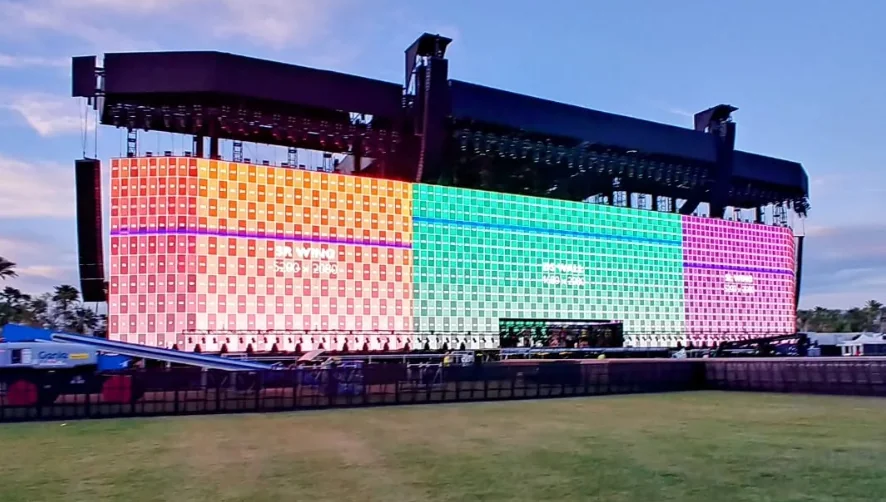
At the Coachella Valley Music and Arts Festival, the role of live performance has expanded far beyond entertainment. In 2026, it functions as a strategic launchpad where artists don’t just perform—they initiate entire eras. What used to be a seasonal festival appearance has evolved into a coordinated cultural rollout that blends music, branding, fashion, and long-term audience positioning.
The shift is subtle but significant. A Coachella set is no longer treated as an isolated event within a tour cycle. Instead, it is often designed as a narrative starting point. Artists use the stage to introduce new aesthetics, preview upcoming projects, debut unreleased material, and establish the visual language of what comes next. The performance becomes less about summarizing a current era and more about signaling the beginning of a new one.
This approach works because of timing and scale. Coachella offers one of the largest concentrated global audiences in live music, both physically and digitally. With livestreams, short-form clips, and instant social distribution, a single performance can define how an artist is perceived for the months that follow. Every visual choice—lighting, wardrobe, staging, and set design—becomes part of a larger strategic message.
The festival environment itself amplifies this effect. Unlike traditional concerts, Coachella exists at the intersection of music, fashion, and digital culture. That overlap allows artists to operate on multiple levels at once. A stage design can hint at a visual era, a surprise guest can signal collaboration direction, and a song debut can function as a soft launch for upcoming releases.
Industry-wise, this has turned Coachella into a key node in the entertainment calendar. Labels, management teams, and brand partners increasingly plan around it, treating it as a high-impact visibility moment rather than just another booking. The return on attention is immediate: a single performance can generate global coverage, trending discourse, and commercial interest across platforms within hours.
What makes this strategy particularly effective in 2026 is how audiences consume culture. People no longer engage with albums or eras in isolation—they experience them through fragmented moments. Coachella provides the first cluster of those moments, which then circulate independently online. The festival becomes the origin point of a narrative that unfolds across the rest of the year.
This also changes expectations for artists. A performance is no longer judged solely on live execution, but on its ability to generate momentum. Did it create conversation? Did it establish a visual identity? Did it produce moments that travel beyond the stage? Success is increasingly measured by cultural activation rather than just audience satisfaction in the moment.
Ultimately, Coachella’s transformation into a business strategy reflects a broader reality of modern entertainment: live events are no longer endpoints. They are starting mechanisms. And in that system, the most valuable performance is not the one that ends the show—it’s the one that begins everything that follows.