Megan Brown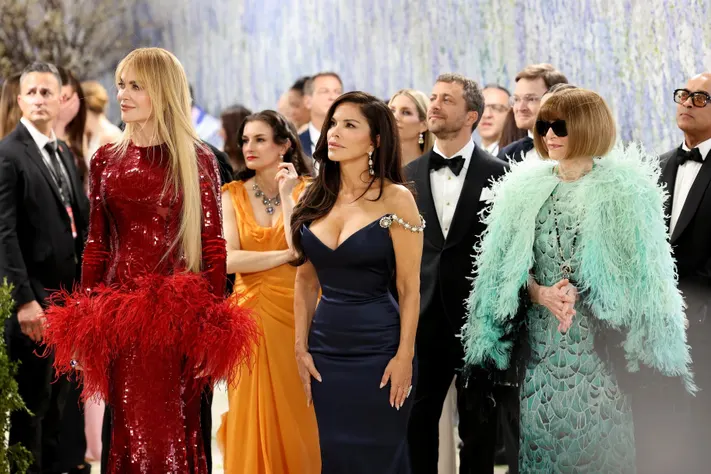
The Met Gala remains one of the few cultural events capable of completely taking over the internet, even days after the red carpet ends. In 2026, the conversation surrounding the gala continues to dominate social feeds, group chats, and online debates, fueled by celebrity appearances, dramatic fashion choices, and the growing influence of AI-inspired design. What was once simply a high-profile fashion fundraiser has evolved into a global digital spectacle, where every outfit becomes content, every reaction becomes engagement, and every viral moment extends the life of the event far beyond a single evening.
Part of the Met Gala’s enduring influence comes from its ability to merge celebrity culture with visual storytelling. Each look is designed not just for the red carpet, but for the internet itself. Fashion houses, stylists, and celebrities understand that the success of an outfit is now measured as much by social engagement as by critical reception. A dress, suit, or avant-garde design is instantly transformed into memes, reaction posts, analysis videos, and viral commentary. Within minutes, images circulate globally, allowing audiences to participate in discussions regardless of whether they follow fashion closely.
The rise of AI-inspired fashion has added another layer to the event’s online dominance. In 2026, futuristic textures, digitally enhanced fabrics, and conceptual designs influenced by artificial intelligence have become major talking points. Audiences are fascinated by the blending of technology and couture, with many online discussions centered on whether certain looks were generated, inspired, or amplified by AI tools. This intersection between fashion and technology creates endless opportunities for debate and speculation, helping the Met Gala remain culturally relevant in a rapidly evolving digital landscape.
Social media platforms amplify the event’s impact through nonstop engagement cycles. Short-form videos dissect celebrity outfits, creators rank the best and worst looks, and memes transform dramatic fashion moments into instantly recognizable internet jokes. Algorithms reward this activity, ensuring that Met Gala content continues appearing in feeds long after the event concludes. The result is a cultural feedback loop where visibility generates more discussion, which in turn generates even more visibility.
Celebrity presence is another reason the event continues to command attention. High-profile appearances from musicians, actors, influencers, and athletes create crossover appeal that extends beyond the fashion world. Fans engage not only with the clothing itself but with the personalities wearing it. A single appearance can spark conversations about relationships, career moves, branding strategies, or broader cultural trends, making the Met Gala a launchpad for multiple overlapping narratives at once.
Audience participation has also become central to the event’s influence. People online no longer passively consume celebrity fashion coverage; they actively shape the conversation. Users create edits, parody looks, and share their own interpretations of themes and outfits, turning the gala into a collaborative digital experience. This collective interaction ensures that the event remains alive online, evolving through humor, critique, admiration, and creativity long after the official coverage ends.
The Met Gala also thrives because it represents escapism and spectacle in an increasingly fast-paced digital world. The extravagant designs, theatrical entrances, and larger-than-life aesthetics provide a form of entertainment uniquely suited for internet culture. In a timeline often dominated by stressful news cycles and constant information overload, the gala offers visually driven content that encourages discussion, creativity, and fantasy. That emotional and visual appeal keeps audiences engaged far beyond the initial event.
Importantly, the gala’s influence reflects how modern culture operates. Events no longer end when they are over physically; they continue through reposts, reactions, and reinterpretations online. The Met Gala succeeds because it is designed for this ecosystem — a perfect combination of celebrity influence, fashion spectacle, internet humor, and digital participation. Every year, it adapts to the language of social media while maintaining the exclusivity and glamour that make people want to watch in the first place.
Ultimately, the Met Gala still controls internet culture because it understands attention better than almost any other event. It blends celebrity visibility, viral fashion, technological innovation, and audience participation into a single night that fuels conversation for days afterward. In 2026, the gala is no longer just a red carpet — it is an internet event engineered for the age of algorithms, memes, and nonstop digital engagement.