Megan Brown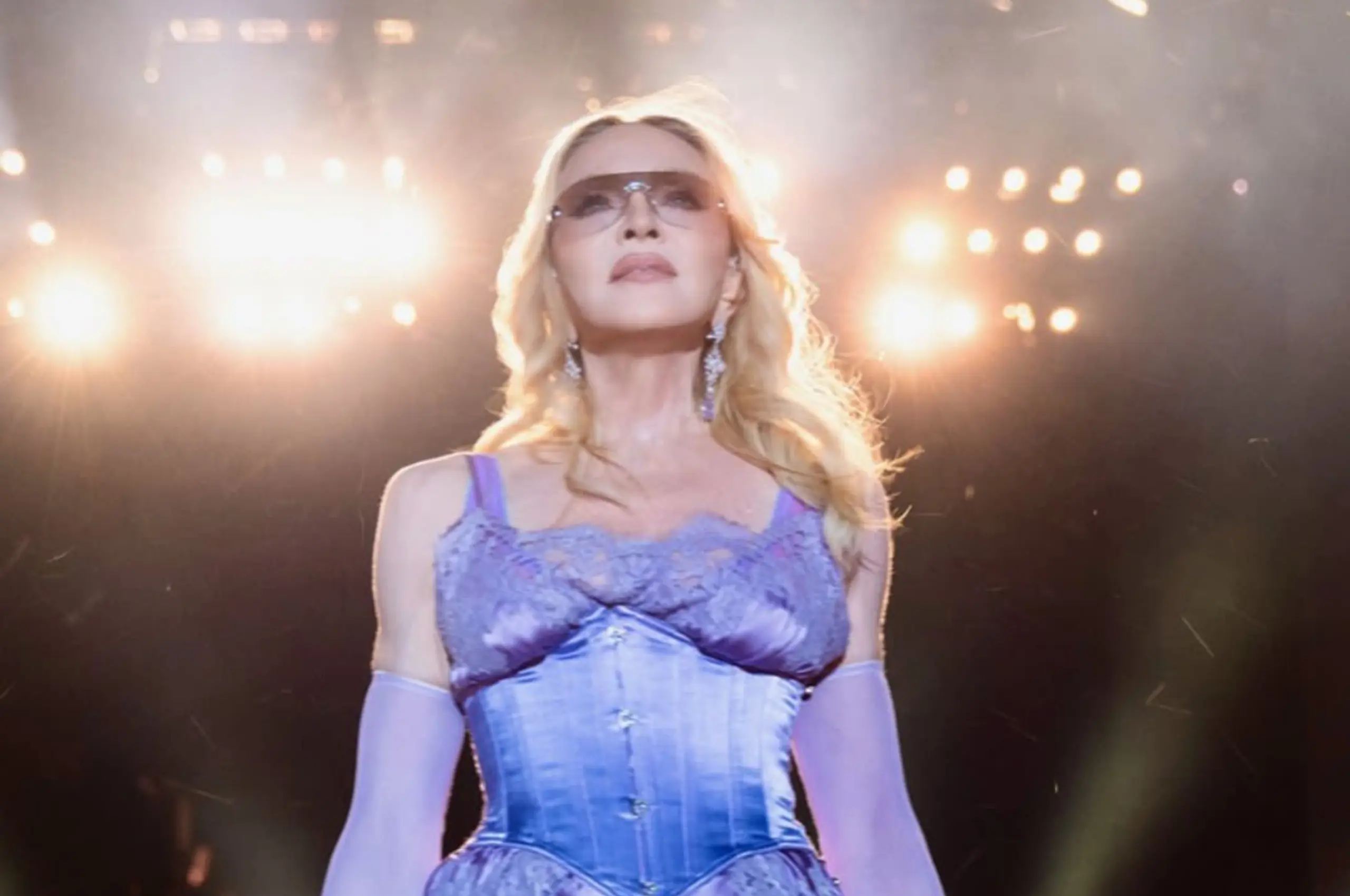
When Madonna appeared at the Coachella Valley Music and Arts Festival, the moment didn’t just land—it sustained. In a culture where attention spikes and fades within hours, her presence managed to extend beyond the initial reaction cycle. The reason comes down to a rare alignment: legacy meeting algorithm at exactly the right point.
Madonna represents something the current digital landscape rarely produces organically—historical weight. Her career spans multiple eras of music, fashion, and cultural reinvention, which means her appearance carries built-in context. When she steps into a modern, high-velocity environment like Coachella, that context doesn’t slow the moment down—it deepens it. Audiences aren’t just reacting to what’s happening now; they’re layering it with everything that came before.
At the same time, the algorithm favors immediacy. It prioritizes moments that generate fast engagement, strong reactions, and repeat viewing. Madonna’s appearance delivered all three. The surprise factor created instant attention, while the visual and cultural familiarity ensured that the moment was easily recognizable and shareable across different audience groups.
This combination is what made it work so effectively. Legacy provided meaning, while the algorithm provided scale. One without the other would not have had the same impact. A purely nostalgic moment might have stayed within a limited audience, while a purely viral moment might have lacked depth. Together, they created something that could travel quickly while still feeling significant.
Another factor is contrast. In a festival environment dominated by emerging artists, new aesthetics, and rapid trend cycles, Madonna’s presence introduced a different kind of signal. She didn’t need to compete with the pace—she disrupted it. That disruption made the moment stand out, giving audiences something distinct to focus on amid the constant flow of content.
The way the moment circulated online also contributed to its longevity. Clips of her appearance weren’t just shared—they were contextualized. Fans and commentators connected it to past performances, earlier eras, and her long-standing influence on pop culture. This layering effect extended the conversation, turning a single appearance into an ongoing narrative rather than a one-time spike.
Importantly, the moment didn’t rely on excess. It wasn’t defined by overwhelming production or constant escalation. Instead, it balanced familiarity with timing. It arrived when attention was already high, inserted itself into an existing cultural conversation, and then allowed that conversation to expand outward.
Ultimately, Madonna’s Coachella moment worked because it understood the current rules of attention without abandoning the value of history. It showed that in 2026, relevance doesn’t come from choosing between legacy and virality—it comes from combining them. When the past is introduced into the present at the right moment, it doesn’t feel outdated. It feels amplified.